UK Passport Photo Code vs Direct Upload: Which to Choose?
When applying for a UK passport online, you must choose between entering a Photo Code or uploading a digital photo file directly. This guide compares both options in detail, covering costs, technical rules, failure troubleshooting, and how HM Passport Office assesses your submission.
If you are halfway through your online British passport application on GOV.UK, you will hit a screen asking you how you want to provide your photo. The system gives you two distinct routes: enter a UK passport photo code or upload a digital photo file directly from your phone, tablet, or computer.
Many applicants freeze at this step. Does a photo code carry a higher acceptance rate? Will HM Passport Office (HMPO) reject your application if you upload your own photo? Do you need to leave the house, walk into town, and feed cash into a booth just to get an approved code?
Here is the short, direct answer: No, you do not need a photo code to apply for a UK passport online. Neither method has an inherent advantage in HMPO's final decision. Both paths simply deliver a digital image file into the HMPO verification system. Whether that file arrives via a third-party retrieval code or straight from your phone's photo library, HMPO subjects the image to the exact same automated biometric checks and manual examiner review.
The real difference lies in convenience, cost, technical control, and how you want to handle the photo setup. Let's look at how both options compare so you can choose the best route for your application.
The Direct Answer: UK Passport Photo Code vs Direct Digital Upload
To make a sensible decision, it helps to understand what the government portal asks for at this checkpoint.
What HM Passport Office Actually Requires
HMPO requires a recent, unedited digital photograph that adheres strictly to the UK international biometric standards outlined in the GOV.UK passport photo rules. The photo must show a clear, focused head-and-shoulders portrait against a plain cream or light grey background, free from shadows, glare, headwear (unless worn for religious or medical reasons), and facial obstructions.
HMPO does not care how the image file reaches their servers. They only care whether the resulting image meets their strict composition and quality specifications. Entering a photo code is simply an alternative to clicking "browse" and choosing a JPEG from your local storage.
Quick Comparison: Which Route Suits Your Situation?
| Feature / Consideration | UK Passport Photo Code | Direct Digital Photo Upload |
|---|---|---|
| Typical Cost | £0 (online generator) to £10–£15 (photo booth / pharmacy) | Free (using your smartphone or digital camera) |
| Where to Get It | Supermarket booths, high street studios, or online photo tools | Taken at home by a friend, partner, or colleague |
| Data Transfer Method | Enter a short alphanumeric code; GOV.UK retrieves the image from a secure cloud server | Upload a file (.jpg, .jpeg) directly from your device storage |
| Automated Checks | Run by GOV.UK immediately after code entry | Run by GOV.UK immediately after file upload |
| HMPO Human Review | Required for all applications | Required for all applications |
| Fallback Flexibility | If the code fails or is mistyped, you must re-enter or switch to upload | If an image is flagged, you can tweak lighting and upload another file instantly |
| Overseas Compatibility | Physical booths abroad rarely issue UK codes; online tools work worldwide | Works anywhere in the world with an internet connection |
| File Retention | Varies by provider (often 30 days; privacy-focused tools wipe within 48 hours) | Retained on your own device indefinitely |
Deconstructing the Core Concepts: Codes, Files, and Approvals
One of the biggest sources of confusion online is the conflation of photo codes, digital files, application reference numbers, and official photo approval. Commercial photo booth operators often market their service in ways that imply a photo code represents official pre-clearance. It does not.
What a Photo Code Is (and What It Isn't)
A UK passport photo code is an alphanumeric identifier generated by an external photo provider—such as a Photo-Me/ME-Group booth, a high-street photographer, Timpson, or an independent web service like Passport Photo Code.
When you take or generate a photo through one of these providers, the image is stored on a secure, temporary cloud server. The provider issues you a code. When you paste that code into your GOV.UK application, the government portal queries that server, fetches the image, and imports it into your digital application form.
Crucially:
- A photo code is not issued by HMPO or GOV.UK.
- A photo code is not proof that HMPO has accepted or approved your photo.
- A photo code is not your passport application tracking reference.
- A photo code does not bypass the HMPO verification process.
Think of a photo code like a digital cloakroom ticket. It simply tells the GOV.UK system which hook your coat is hanging on. It does not verify that your coat complies with the dress code.
Direct Upload Demystified
Direct digital upload cuts out the middleman storage server entirely. You take a photo using a smartphone, tablet, or digital camera. You navigate to the GOV.UK photo step, select "Upload a photo", browse your device files, and select the JPEG file. The image transfers straight from your phone or laptop into your active GOV.UK session.
Historically, passport applications required physical paper prints counter-signed by a professional. When HMPO modernised the service under the HMPO digital transformation strategy, direct digital uploads became the standard pathway for millions of British citizens renewing their documents each year.
How the Photo Step Works on GOV.UK
When you start your application at passport.service.gov.uk, the form takes you through personal details before arriving at the photo section. Here is the operational reality of what happens on screen.
[Start Online Application on GOV.UK]
                │
                ▼
   [Photo Submission Screen]
       Choose your method:
       ├── Route A: Enter a Photo Code
       │       │
       │       ▼
       │   [GOV.UK retrieves cloud image]
       │
       └── Route B: Upload Digital Photo
               │
               ▼
           [Select file from device]
                │
                ▼
  [Automated Biometric Compliance Check]
     Checks: head size, tilt, background contrast
                │
     ┌──────────┴──────────┐
     ▼                     ▼
 [Passed]           [Warning / Flagged]
     │                     │
     │              Decide to proceed
     │              or supply replacement
     │                     │
     └──────────┬──────────┘
                ▼
[Submit Application & Pay Fee]
                │
                ▼
[Manual Review by HMPO Human Examiner]
Navigating the "Add Your Photo" Screen
The GOV.UK portal presents you with a clear choice:
- "I have a code from a photo booth or shop"
- "I want to upload a photo from my phone, tablet or computer"
If you select the code option, you are shown a single input field. You enter your code (which often starts with a provider prefix or a string of numbers and letters). Once you click submit, the page takes two to three seconds to fetch your image and displays it on your screen.
If you select the upload option, you tap a button that opens your device file selector or camera roll. You select the photograph, and it loads directly into the browser window.
The Automated Pre-Assessment Tool
Regardless of which route you choose, the very next screen is identical. The GOV.UK built-in algorithmic checker scans the imported image against basic biometric standards:
- Is there a recognisable human face in the frame?
- Is the head positioned centrally, facing forward, and tilted within acceptable limits?
- Is the distance from the chin to the crown of the head proportional to the overall image dimensions?
- Is the contrast between the subject and the background sufficient to distinguish outline boundaries?
The automated tool gives you an immediate technical assessment, usually showing a green tick with text like "The photo looks good" or an amber/red warning highlighting potential issues, such as "The background may not be plain enough" or "Shadows detected across the face".
Option 1: Using a UK Passport Photo Code in Detail
Using a code is widespread across the UK, largely because physical photo booths in shopping centres and supermarkets have adapted to the digital age.
Sources of Photo Codes: Booths, High Street Retailers, and Online Services
There are three distinct ways to get a UK passport photo code:
- Automated Kiosks / Photo Booths: Machines found in train stations, post offices, and supermarkets (such as Photo-Me booths operated by ME Group). You sit inside, follow screen prompts, pay between £10 and £15, and receive a printed slip containing a code alongside four small physical prints.
- High-Street Studios and Pharmacies: Retail chains like Timpson, Boots, Snappy Snaps, or independent high-street photographers. A member of staff takes your photo against a drop-down backdrop, uploads it to their provider system, and hands you a card with a retrieval code.
- Independent Online Services: Web-based tools like Passport Photo Code. You take a clear photo at home on your phone, upload it, and the software crops, scales, and aligns it to UK passport standards, generating an instant Photo Code alongside a downloadable high-resolution digital image file without visiting a physical store.
The Benefits of the Code Route
- No File Management: For people who are uncomfortable saving, organising, or re-sizing digital image files on their computer or mobile device, entering a short code feels simple.
- Automated Cropping: Commercial photo booths and dedicated online services automatically frame the image so that the head measures between 29mm and 34mm from crown to chin—a technical specification that DIY photographers sometimes struggle to judge manually.
- Preset Quality Checks: Most professional code providers run basic contrast and brightness algorithms before generating the code, reducing the likelihood of basic sizing mistakes.
Hidden Friction: Typos, Expiry Windows, and Server Downtime
While convenient, the code route introduces external points of failure:
- Typographical Mistakes: Codes are strings of alphanumeric characters. Mistaking an uppercase "O" for a zero "0", or a capital "I" for a lowercase "l" or number "1", is exceptionally common and results in an immediate "Code not recognised" error.
- Expiry Windows: Photo codes do not last forever. Provider servers store images temporarily to comply with privacy principles. High-street booth codes often expire after 30 days. If you buy your code in a booth and sit on your application for a month, the code may vanish from the system.
- Server Delays: If the third-party server hosting the image experiences maintenance or an outage, the GOV.UK site cannot pull the photo, halting your application progress.
Most importantly: a photo code does not mean your photo has passed HMPO review. It only means the photo was stored on an external server and successfully pulled into the web form.
Option 2: Direct Digital Photo Upload in Detail
Direct digital upload has grown rapidly as smartphone camera systems have evolved. Modern mobile phones pack high-resolution sensors, auto-exposure controls, and smart portrait processing that easily meet passport resolution requirements—provided you set the scene correctly.
Official Technical Parameters for Direct Uploads
If you bypass codes and upload a file directly, HMPO specifies exact technical requirements for the image file:
- File Format: Must be a baseline JPEG or JPG format (GOV.UK does not accept HEIC files directly from newer iPhones without conversion, nor does it take PNG or PDF files).
- Minimum File Size: 50 kilobytes (KB).
- Maximum File Size: 10 megabytes (MB).
- Minimum Dimensions: 600 pixels wide by 750 pixels tall.
- Aspect Ratio: Roughly 4:5 (the standard portrait passport framing).
- Editing Restrictions: No computer software filters, retouching, smoothing, redeye removal, or artificial background manipulation (e.g. cutting out your head and pasting it on a plain background using Photoshop or automated AI cutout apps).
According to the International Civil Aviation Organization (ICAO) Doc 9303, which governs international machine-readable travel documents, biometric passport images require authentic facial topography. Excessive compression artifacts or AI manipulation can distort the biometric landmarks used by border control gates.
Composition and Lighting Rules That Actually Matter
To pass HMPO standards via direct upload, the photograph must adhere to standard physical composition rules:
- Background: Must be plain cream or light grey. Pure brilliant white can wash out pale skin tones, while patterned wallpaper, tiles, or visible doorframes will trigger automatic rejection.
- Lighting: Even, balanced natural daylight is best. Avoid direct overhead bulbs that cast heavy dark pockets under your eyebrows, nose, and chin.
- Positioning: Stand or sit roughly 0.5 metres away from the background wall to minimise drop shadows behind your shoulders, with the person taking the photo standing approximately 1.5 to 2 metres away.
- Expression: Completely neutral mouth closed, eyes open and looking straight into the lens, no smiling or raised eyebrows.
- Accessories: No glasses with tinted lenses or thick frames that obscure the eyes; reflections on clear lenses will cause a rejection. Hair must be tucked back off the face to ensure both eyebrows, cheek contours, and jawlines are visible.
Pros and Cons of the Direct Upload Approach
Pros:
- Zero Expense: Completely free if you take the photo yourself with a phone.
- Convenience: You can complete the entire process at 11:00 PM on a Sunday from your living room sofa.
- Instant Retakes: If the GOV.UK automated checker flags an issue with lighting or contrast, you can simply take another photo immediately and re-upload, without paying for another booth session.
Cons:
- User Responsibility: You must manage the lighting, background, and head distance yourself without the physical guidance rails of a booth.
- File Format Traps: iPhone users who capture photos in Apple's proprietary HEIC format must ensure their device exports the image as a standard JPEG before attempting to upload.
Behind the Scenes: How HM Passport Office Reviews Your Photo
Many passport applicants believe that if the online checker gives their photo a green tick, their photo is permanently approved. This misunderstanding leads to immense frustration when an application is delayed weeks later by a photo rejection letter.
Understanding how HMPO actually evaluates photos clears up this confusion.
Stage 1: Algorithmic Geometry and Contrast Checks
When your image loads into GOV.UK—whether by code or direct upload—an algorithm analyses pixel matrices. It looks for basic facial geometry: eye level, distance between pupils, nose position, chin line, and contrast gradients between the head and the background.
If the tool detects severe non-compliance (for example, the subject's head is tilted sideways by 25 degrees, or the face is completely in shadow), it will display a red warning and block submission until a clearer photo is provided.
If it detects minor issues (such as borderline contrast or slight uneven lighting), it will display an amber advisory note. The system allows you to override amber warnings by ticking a box confirming "I want to submit this photo anyway", explaining why (for instance, an applicant with a physical medical condition affecting posture).
Stage 2: Manual Examiner Inspection
Passing the automated checker is only phase one. Once you complete your application and pay the statutory passport fee (which, following recent UK Home Office passport fees revisions, stands at £88.50 for a standard adult online application or £100.00 for a paper submission), your application joins the HMPO processing queue.
A human passport examiner at an HMPO regional processing centre physically inspects the photograph on a calibrated screen before the passport is sent to the printer. The human examiner checks for subtle issues that software easily misses:
- Has the photo been altered or digitally smoothed using a smartphone "beauty mode" or AI filter?
- Is there subtle glare on clear spectacle lenses covering any part of the pupil?
- Is the background genuinely plain cream/grey, or are there faint wall textures, picture rail outlines, or wallpaper patterns visible?
- Is the applicant's expression truly neutral, or is there a subtle grin or smirk?
- Is the child or infant showing a visible adult support hand or toy in the frame?
If the human examiner rejects the image, HMPO suspends the application and sends an email containing a secure link where you must supply a new digital photo. The application clock stops until you provide a compliant replacement.
The Myth of the "Guaranteed Acceptance" Claim
Be deeply sceptical of any commercial photo booth, high street photographer, or smartphone app claiming "100% Guaranteed HMPO Acceptance".
No private commercial entity has the authority to guarantee acceptance by HM Passport Office. HMPO examiners have sole statutory authority over passport approvals. While professional equipment and automated formatting reduce rejection risks, no code or service can legally promise that an HMPO examiner will not spot an issue and request a retake.
Troubleshooting: What to Do When a Photo Code Fails
One of the main reasons applicants abandon the code route and switch to direct upload is an input error on the GOV.UK portal.
Photo Code Error on GOV.UK
        │
        ├── "Code not recognised"
        │       │
        │       ├── Check 0 (zero) vs O (letter)
        │       ├── Check 1 (one) vs I (capital eye) / l (lowercase el)
        │       └── Remove any accidental leading/trailing spaces
        │
        ├── "Photo expired"
        │       │
        │       └── Provider cloud retention window passed
        │           └── Switch directly to direct photo upload
        │
        └── "Unable to retrieve photo / Server error"
                │
                └── Provider host down or connection timeout
                    └── Switch to direct file upload immediately
Common Error Messages and Quick Fixes
If you type in your code and GOV.UK returns an error, run through this checklist before panicking:
- "Code not recognised": Re-examine your receipt slip or email. Look closely at ambiguous characters. Swap zeros (
0) for the letterO, lowercaselfor uppercaseIor digit1, and capitalBfor digit8. Check that your device did not automatically insert a trailing space at the end of the text string when pasting. - "Photo expired": The external provider has already purged the image from their hosting database. Most commercial booths keep photos online for 30 days, while privacy-conscious tools delete them much faster. If expired, the code cannot be revived.
- "Unable to connect to service": This happens during peak evening hours or during routine maintenance of external photo servers. Wait 15 minutes and retry once.
How to Switch to Direct Upload Without Restarting Your Application
If your code refuses to work, you do not need to cancel your application or start from scratch.
Directly underneath the photo code entry box on GOV.UK, there is a clear text link that reads "I do not have a code" or "Upload a photo instead".
Clicking this link returns you to the upload selection screen. From there, you can upload a digital photo file stored on your phone or computer. Having both assets available—a photo code and the underlying digital image file—is the safest way to prevent application delays.
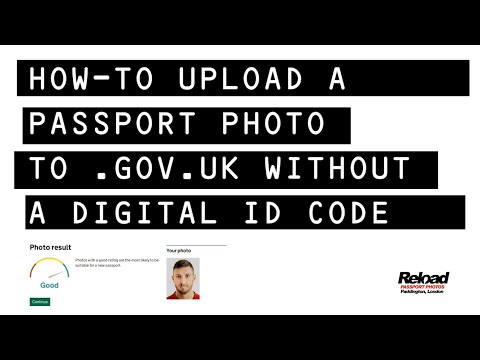
At Passport Photo Code, users receive both an instant Photo Code and the downloadable, cropped digital JPEG file. If the GOV.UK code engine experiences a temporary hiccup, you simply click the upload link, select the downloaded image file, and continue your application without delay.
Applying from Outside the UK: Overseas Scenarios
British citizens applying from overseas face a unique set of hurdles when submitting photos. The UK passport application system is centrally managed, but high-street infrastructure abroad does not integrate with the UK photo code framework.
Why Foreign Photo Booths Cannot Produce UK Photo Codes
If you live in Spain, France, the United States, Australia, or anywhere outside the UK, you cannot walk into a local pharmacy or photo booth and obtain a GOV.UK photo code.
Foreign photo booths are configured to local regulatory standards:
- United States: US passport photos measure 2x2 inches (51x51mm) with a pure white background.
- Schengen Area / Europe: Many European booths print 35x45mm photos, but their kiosk software interfaces with national police or interior ministry servers, not the UK Home Office.
- Network Exclusivity: Third-party photo booth code networks (such as ME Group / Photo-Me UK) operate under specific agreements within the UK retail ecosystem. Foreign machines simply do not generate codes formatted for
passport.service.gov.uk.
Best Practice for Overseas British Citizens
If you are an expatriate or applying while living abroad, you have two practical choices:
- Direct Digital Upload (Recommended): Have a family member or colleague take a photo of you against a light, plain interior wall using a smartphone, adhering carefully to UK composition parameters, and upload the file directly to GOV.UK.
- Use an Online Photo Code Generator: Upload your camera roll photo to an independent UK-compliant web platform that automatically formats the image to British standards and creates both an active UK photo code and a compliant digital download.
Overseas applications already take longer to process and carry higher shipping costs. Submitting a compliant digital upload prevents costly international courier cycles if a physical print or incompatible booth code fails.
Data Privacy and Photo Retention
When you use an online tool, a physical kiosk, or a high-street studio, you are entrusting your biometric image to a commercial third party before it reaches the government. Understanding how your data is handled is a sensible consideration under the Data Protection Act 2018 and UK GDPR.
Commercial photo booths store images on remote servers for weeks so that applicants have time to complete their forms. However, extended retention windows create an unnecessary data footprint.
Best-in-class independent web services process the image, generate the retrieval token, and wipe both the uploaded raw image and the processed output within a tightly restricted window—typically no longer than 24 to 48 hours. Once you enter the code into GOV.UK, HMPO caches the photo within their accredited secure infrastructure, meaning long-term third-party storage serves no practical benefit to you.
Frequently Asked Questions
Can I switch to uploading a photo if my code does not work?
Yes. The GOV.UK application does not lock you into your initial choice. If your code is not recognised, rejected, or expired, click the link to switch methods, select "Upload a photo", and choose an image file from your device.
Is a direct digital upload cheaper than getting a photo code at a booth?
Substantially. High-street photo booths and commercial retail studios typically charge between £10 and £15 for a photo code and print slip. Direct digital upload using your own smartphone costs nothing. Independent online services that provide both a code and a digital file provide a convenient middle ground without high-street retail markups.
Can I get a photo code from a selfie taken on my phone?
HMPO rules explicitly state: do not take a selfie. Selfies distort facial proportions due to the short focal length of front-facing mobile cameras, and your arm position naturally pulls your shoulder forward, throwing off the required posture. Have someone else take the picture using the main rear camera of your phone from a distance of 1.5 to 2 metres, or mount the phone on a steady surface using a self-timer.
Does HMPO keep my uploaded photo if my application is cancelled?
If an online application is abandoned or cancelled before formal submission and payment, unsubmitted session data is routinely cleared from temporary portal caches in line with Home Office data retention policies. Once an application is paid for and submitted, HMPO retains the photographic record as part of your permanent passport audit trail.
Can I use a photo code for a paper passport application?
No. Photo codes are exclusively designed for the digital application route at passport.service.gov.uk. If you are submitting a physical paper application form (collected from a Post Office), you must provide two identical printed, physical photographs cut to 35mm wide by 45mm tall, meeting standard paper submission rules.
Making Your Choice: The Practical Recommendation
Choosing between a UK passport photo code and a direct digital upload comes down to your personal comfort with technology and your budget.
- Choose a photo code if you prefer having your framing handled by an automated tool, don't want to fiddle with image file formats on your computer, or already have a booth code from a recent visit to a supermarket.
- Choose direct digital upload if you want to complete your application for free at home, need to take multiple shots to get a lighting setup you are happy with, or are applying from outside the United Kingdom where high-street photo booths do not generate UK codes.
If you want the best of both worlds, use an independent online tool that formats your photo to official standards, delivers an active UK Photo Code for immediate entry, and simultaneously provides a downloadable digital file as a backup. Whichever route you take, using a UK passport photo code or uploading directly, remember that neat framing, balanced lighting, and a plain background remain the three factors that actually determine whether HM Passport Office issues your new passport without delay.